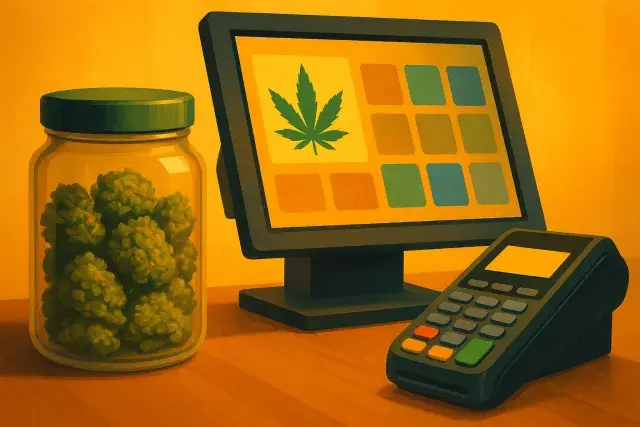

Running a cannabis retail operation without purpose-built software is a bit like managing a pharmacy with a cash register and a notepad - technically possible, catastrophically inefficient, and potentially illegal. Cannabis retailers face a compliance burden that most other industries never encounter: real-time state reporting, purchase limits enforced at the point of sale, seed-to-sale tracking, and product restrictions that vary by jurisdiction. A general-purpose POS system handles none of this. Choosing the right dispensary POS software is, therefore, not a feature comparison exercise - it is a foundational business decision.
The market has matured considerably. Early cannabis retail operations cobbled together workarounds using retail tools designed for coffee shops or convenience stores. Today, purpose-built platforms address the full operational stack: compliance reporting, inventory control, customer management, and payments. Finding the best dispensary POS system for your specific operation - whether you run a single boutique shop or a multi-location chain - requires understanding what each layer of the software actually does and how those layers interact under real operating conditions.
This guide breaks down every dimension of that decision: what features matter, what compliance requirements shape your options, how inventory management integrates with point of sale, and what questions to ask vendors before you sign a contract. Whether you are opening your first location or replacing a system that has outgrown your needs, the information here will help you make a choice you will not regret in six months.
Understanding What Makes Cannabis POS Different From General Retail
The Compliance Layer That General POS Systems Cannot Handle
Every state with legal cannabis has a designated seed-to-sale tracking system - Metrc, BioTrack, MJ Freeway, or a similar platform - that retailers are legally required to report to in real time or near real time. A marijuana dispensary point of sale must integrate directly with these systems, automatically pushing sales data, adjusting inventory records, and flagging transactions that would exceed a customer's legal purchase limit. Miss a report, or report incorrectly, and you risk fines, license suspension, or closure.
General retail POS platforms like Square or Clover are not built for this. They have no concept of purchase limits, no API connections to state tracking systems, and no framework for handling the product categories that cannabis compliance requires - whether that is distinguishing between flower, concentrate, and edibles for purchase limit calculations or managing medical versus recreational inventory under the same roof.
Choosing a cannabis retail POS system means choosing software that treats compliance as a core function, not an afterthought bolt-on. The best platforms embed compliance checks directly into the transaction workflow so that budtenders cannot accidentally complete a non-compliant sale.
Payment Processing Constraints Unique to Cannabis Retail
Cannabis remains federally illegal in the United States, which means most major card processors will not touch it. Most dispensaries operate primarily in cash, though the landscape is shifting with the rise of debit PIN pad solutions, ACH payments, and cashless ATM systems. Your weed shop POS system needs to accommodate whichever payment method your operation supports - and it needs to do so without exposing your business to chargeback risk or processor termination.
Look for POS platforms that have established relationships with cannabis-friendly payment processors, or that support integration with third-party payment solutions. The payment layer is one area where a cannabis-specific system delivers immediate, practical value over any general retail alternative.
Menu Management and Product Complexity
A typical cannabis dispensary carries hundreds of SKUs across multiple product categories, each with distinct attributes: THC percentage, CBD percentage, strain type, producer, harvest date, and package weight. These attributes are not decorative - they affect compliance reporting, customer purchasing decisions, and inventory tracking. Your dispensary POS software must handle this complexity natively, allowing staff to search by attribute, display accurate product information at the point of sale, and sync menu data to any online ordering platform you operate.
Menu management also has a time-sensitive dimension. Products sell out, new batches arrive with slightly different lab results, and promotional pricing changes frequently. A system that makes menu updates cumbersome will create daily friction for both staff and customers.
Core Features to Prioritize in a Dispensary POS Software
Real-Time Inventory Tracking and Reconciliation
Inventory is where cannabis retail operations lose money quietly. Shrinkage, miscounts, and reporting errors compound over time. Effective dispensary inventory management software tracks stock at the package level, not just the product level, which is exactly what state compliance systems require. Every time a sale is completed, the package weight or unit count updates automatically. Every time a new shipment arrives, the receiving workflow links incoming packages to their state-issued manifest.
The most capable platforms also support automated low-stock alerts, so you are not discovering stockouts at the worst moment. Inventory reconciliation tools allow managers to audit physical counts against system records and log any discrepancies with an explanation - a basic requirement for any compliance audit.
Customer Profiles and Purchase History
A robust marijuana dispensary point of sale maintains customer profiles that go beyond contact information. These profiles should store purchase history, preferred products, loyalty points, medical recommendation details (where applicable), and any notes that help budtenders provide personalized service. Purchase history also enables the system to enforce purchase limits accurately across visits - a compliance function, not just a convenience feature.
Loyalty programs integrated directly into the POS reduce the need for third-party tools and make it easier to run targeted promotions without exporting data to another platform.
Staff Management and Role-Based Access
Cannabis retail has strict requirements around who can access what. A dispensary POS software worth considering should support role-based permissions that restrict access to sensitive functions - void transactions, discount approvals, inventory adjustments - to authorized personnel only. Time-tracking and shift management built into the same platform reduces administrative overhead and creates an audit trail for every employee action taken within the system.
Reporting and Analytics
Daily sales reports, end-of-day cash reconciliation, product performance analytics, and compliance reports are all non-negotiable outputs of any cannabis retail POS system. The distinction between adequate and excellent lies in how accessible this data is. Reporting dashboards that require IT support to interpret defeat the purpose. Look for systems where a store manager can pull a meaningful sales-by-category report in under two minutes without assistance.
- Daily and weekly sales summaries by category and budtender
- Inventory aging reports to identify slow-moving product
- Compliance reports formatted for direct submission or audit review
- Customer frequency and loyalty redemption data
- Discount and promotion performance tracking
Dispensary Inventory Management Software: What to Look For
Seed-to-Sale Integration and State System Sync
Dispensary inventory management software must maintain a continuous, accurate connection to your state's seed-to-sale tracking platform. When a package is sold, transferred, or destroyed, that event needs to flow to the state system without manual intervention. Manual reporting is not just inefficient - it is a compliance liability. Human data entry introduces errors, and errors in state-required records can trigger investigations.
When evaluating a platform, ask specifically which state tracking systems it integrates with, whether that integration is bidirectional, and what happens when the state system experiences downtime. Offline mode functionality is not optional; your store needs to keep selling even when external systems are temporarily unavailable, with automatic reconciliation once connectivity is restored.
Batch and Package-Level Tracking
Batch-level tracking allows you to link a specific product on your shelf to its original harvest lot, lab test results, and supplier documentation. This matters for product recalls - a reality in cannabis retail - and for customer inquiries about the provenance of what they are purchasing. A weed shop POS system that tracks at the package level rather than just the product level gives you the granularity that both regulators and discerning customers expect.
Purchase Order Management and Receiving Workflows
Efficient receiving is the foundation of accurate inventory. When a delivery arrives, your system should allow staff to scan or enter package IDs from the state manifest, verify quantities against the purchase order, flag any discrepancies before accepting the delivery, and automatically update on-hand counts. Systems that require manual data entry at this stage introduce errors from the start of the inventory lifecycle.
Purchase order management within the same platform - rather than handled in a separate spreadsheet or tool - keeps procurement data connected to inventory and sales data, making it much easier to identify reorder patterns and negotiate with suppliers based on actual consumption history.
Waste and Destruction Logging
Cannabis product that expires, is damaged, or fails quality inspection cannot simply be discarded without documentation. State regulations require that waste and destruction events be logged and reported. Your dispensary inventory management software must support this workflow natively, allowing staff to record the reason for disposal, the quantity, and the associated package IDs, with automatic reporting to the state system where required.
Compliance and Regulatory Considerations When Selecting a System
State-Specific Requirements and System Certifications
Not all cannabis retail POS systems are certified or approved in every state. Some states maintain a list of approved technology vendors; others have no formal approval process but still require specific reporting formats. Before shortlisting any platform, confirm that it is actively used and compliant in your state, and that the vendor has a demonstrated track record of updating the system when regulations change.
Regulatory changes happen with little warning. A state may update its reporting requirements, change its tracking system, or modify purchase limits. Your software vendor's responsiveness to these changes is as important as the features the system offers today.
HIPAA Considerations for Medical Dispensaries
If your operation includes medical cannabis sales, customer data - including medical recommendations and purchase history - may be subject to HIPAA or state-level health privacy regulations. Your marijuana dispensary point of sale should include data security features appropriate for protected health information: encrypted storage, access controls, and audit logging. Ask vendors directly how they handle medical customer data and what their breach notification protocols are.
Age Verification and Purchase Limit Enforcement
Automated age verification at the point of sale is a compliance requirement, not a feature upgrade. The system should prompt for and record ID verification for every customer, every visit, with no ability for staff to bypass the check. Purchase limit enforcement should be equally automatic: the system should calculate a customer's remaining purchase allowance for the day based on their purchase history and alert the budtender if a transaction would exceed the legal limit before the sale is completed.
Evaluating Vendors: Questions That Separate Good Systems from Great Ones
Implementation, Training, and Onboarding
The gap between software that looks good in a demo and software that works well in a live dispensary environment is often bridged - or not - by the quality of implementation support. Ask vendors how long a typical implementation takes, what the onboarding process looks like for staff with no prior experience on the platform, and what resources are available once you go live. A poorly managed implementation can cost you weeks of operational disruption and staff frustration that persists long after go-live.
Support Model and Response Times
Cannabis retail does not stop at 5 PM on a Friday. If your system goes down during a Saturday rush, you need support that answers immediately - not a ticketing system with a 48-hour response window. Understand exactly what support model each vendor offers: 24/7 phone support, live chat, or email only. Ask about average response times for critical issues and whether support is included in the base subscription or charged separately.
Integration Ecosystem
A cannabis retail POS system rarely operates in isolation. It needs to connect with online ordering platforms, loyalty program tools, digital menus, accounting software, and potentially e-commerce solutions. Before committing to a platform, map out every system you currently use or plan to use and verify that native integrations or reliable APIs exist for each one. Integration gaps that require manual data transfer between systems create ongoing operational costs and accuracy risks.
Pricing Structure and Total Cost of Ownership
Dispensary POS software is rarely priced simply. Subscription fees, per-terminal charges, payment processing fees, onboarding costs, and charges for premium features can add up significantly. Request a full breakdown of all costs - including what happens if you add locations, registers, or users - and calculate the total cost of ownership over a two-year period. The cheapest monthly subscription often becomes the most expensive option once all variables are factored in.
Multi-Location Operations: Scaling Your Cannabis Retail POS System
Centralized Inventory Visibility Across Locations
For operators running more than one dispensary, centralized inventory visibility is not a luxury - it is an operational necessity. A cannabis retail POS system built for multi-location operations allows managers at the corporate level to view on-hand quantities, sales velocity, and inventory aging across all stores in real time. This visibility enables smarter purchasing decisions, inter-store transfers when one location is overstocked and another is running low, and consolidated compliance reporting.
Consistent Customer Experience Across Locations
Customer profiles, loyalty points, and purchase history should follow a customer across all your locations. A medical patient who visits your downtown store should be recognized at your suburban location, with their recommendation details, purchase limits, and loyalty balance intact. Systems that maintain customer data at the location level rather than the organization level create friction and loyalty program inconsistencies that frustrate repeat customers.
Centralized Reporting and Corporate-Level Analytics
Multi-location operators need reporting that consolidates performance data across all stores without requiring manual aggregation. Look for platforms that offer a corporate dashboard with configurable views: total revenue by location, top-selling products across the organization, budtender performance comparisons, and inventory position by store. The ability to filter, drill down, and export this data without custom development work is a meaningful differentiator among competing platforms.
Making the Final Decision: A Practical Evaluation Framework
Running a Structured Demo and Pilot
A demo controlled by a vendor's sales team will always show the system at its best. To get an accurate picture, request a sandbox environment where your staff can run mock transactions, process a receiving workflow, generate compliance reports, and test the scenarios that are most operationally complex for your store. If possible, negotiate a pilot period at one location before committing to a full rollout. Real-world use under your actual conditions will surface problems that no demo can reveal.
Reference Checks with Current Customers
Ask vendors for references from dispensaries of similar size and structure to yours - not just their flagship enterprise clients. Speak directly with operators, not just technology managers. Ask them how the system has held up over time, how the vendor has responded to compliance changes, what they would do differently in their selection process, and whether they would choose the same platform again. The answers to these questions are more reliable than any feature checklist.
Contract Terms and Exit Provisions
Before signing, read the contract carefully - particularly the sections on data ownership, data export, and contract termination. You should be able to export your complete customer, inventory, and transaction history in a usable format if you decide to switch systems. Vendors that make data portability difficult are creating lock-in by design. Understand the notice period required for cancellation, any early termination fees, and what happens to your data after the contract ends.
Frequently Asked Questions
What is the difference between a dispensary POS system and a general retail POS?
A dispensary POS system integrates directly with state seed-to-sale tracking platforms, enforces cannabis-specific purchase limits, handles product attributes like THC percentage and batch tracking, and supports cannabis-compliant payment processing. General retail POS platforms do not include any of these functions and cannot be configured to meet cannabis compliance requirements without extensive - and typically unsupported - customization.
How does dispensary inventory management software connect to state compliance systems?
Purpose-built dispensary inventory management software maintains a live API connection to state tracking platforms such as Metrc or BioTrack. Every inventory event - sale, transfer, destruction, or adjustment - is automatically reported to the state system without manual data entry. The software also pulls incoming manifest data from the state system to streamline the receiving process and ensure package IDs are accurately recorded from the moment they enter your inventory.
Can a small single-location dispensary afford enterprise-level POS software?
Many cannabis retail POS vendors offer tiered pricing specifically for single-location operators. The more important question is whether the cost of a capable system is less than the cost of compliance failures, inventory errors, or operational inefficiencies caused by an inadequate one. For most operators, the answer is yes - particularly when factoring in the legal exposure that accompanies non-compliant software.
What should I do if my state changes its compliance reporting requirements after I have already deployed a POS system?
This is primarily a vendor responsibility, not an operator one. Your contract should specify that the vendor is responsible for keeping the system compliant with regulatory changes in your operating state. Before signing, ask the vendor for examples of how they have responded to past regulatory changes - specifically how quickly updates were deployed and how operators were notified. A vendor with a poor track record in this area is a significant operational risk.
How long does it typically take to implement a new cannabis retail POS system?
Implementation timelines vary by platform complexity and store size, but most single-location deployments take between two and six weeks from contract signing to go-live. This includes data migration, hardware setup, staff training, and integration configuration. Multi-location rollouts take longer and benefit from a phased approach - launching at one store first, refining the process, then rolling out to remaining locations.
Is it possible to switch dispensary POS systems without losing customer and inventory data?
Yes, but data migration quality varies significantly between platforms. Before committing to a new system, confirm that your existing platform will export customer records, purchase history, and inventory data in a format the new platform can import. Also verify that the new vendor has a structured migration process and has successfully migrated data from your current platform before. Gaps in historical data - particularly purchase history - can affect loyalty program continuity and compliance audit trails.