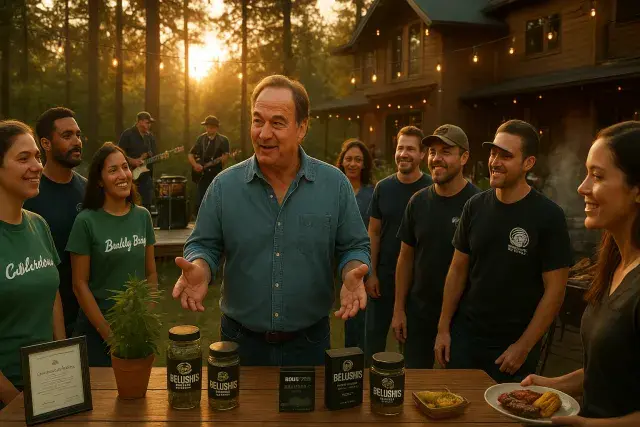
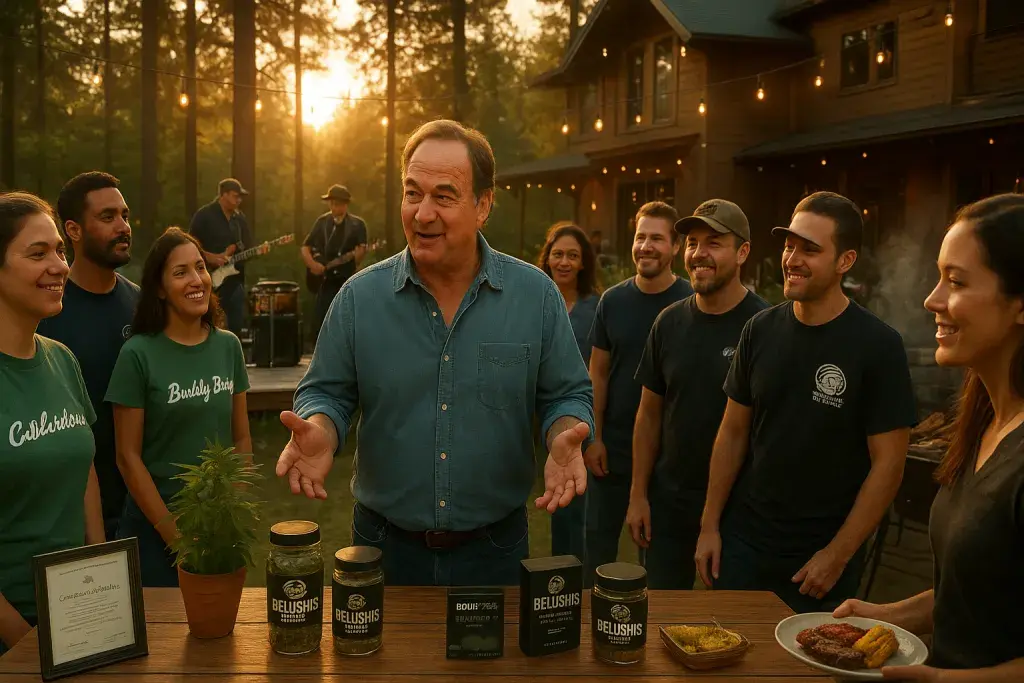
At a private event northeast of Spokane last Thursday, Jim Belushi wasn't primarily working the room as a celebrity - he was working it as a brand owner with product to move. The gathering at Daniels Resort, organized by Belushi's Farm's Washington partners Buddy Boy Farm and Skunk Processors, pulled together local cannabis retail employees for what amounted to a wholesale brand introduction wrapped inside a summer evening of barbecue and live blues. That format - experiential, relationship-driven, off the dispensary floor - reflects a distribution strategy that more licensed brands are leaning on as competition for shelf space tightens in adult-use markets.
Belushi's Farm operates across roughly 20 states through a licensing and partnership model: the brand works with locally licensed cultivators and processors who grow and package product under the Belushi's Farm label, rather than owning facilities in each jurisdiction. CEO Gregg Steinberg describes the approach as family-oriented, but the operational logic is straightforward - it's asset-light brand extension through compliant, state-licensed partners. For dispensary buyers and wholesale buyers reviewing their menus, understanding the supply chain behind a branded product matters, particularly when it comes to batch-level traceability, certificate of analysis documentation, and ensuring that each SKU on the shelf can be tied back to a licensed in-state handler. For operators in newer or expanding markets looking to understand how branded cannabis partnerships work in practice, resources like this one can help - read more - about how licensed retail frameworks shape brand and retailer relationships at the state level.
The Washington event underscores how cannabis brands - especially those built around a recognizable name - are investing in retail staff education as a primary sales channel. Budtenders and floor staff remain among the most direct influences on what a consumer ultimately purchases. Training dispensary employees on a brand's story, product positioning, and cultivation approach is, in practical terms, a form of point-of-sale marketing that operates inside the dispensary without triggering most state advertising restrictions. It's not glamorous strategy. But it works, and it's compliant in ways that digital advertising and billboard placements frequently are not, given the patchwork of state-level rules governing cannabis promotion.
Celebrity Branding in a Compliance-Driven Market
Belushi is candid about his role. He's not a cultivator in the conventional sense - he's a steward of the brand, to use the word a veteran once offered him at a dispensary visit, a story he recounts with visible emotion. That stewardship translates, operationally, into showing up. Visiting dispensaries, speaking directly with customers, and participating in brand events gives the company a human face that product packaging and wholesale catalogs cannot provide. In a market where SKU proliferation is real and buyer fatigue is setting in, that direct retail engagement carries commercial weight.
The thing is, celebrity cannabis brands have had a mixed record. Some have struggled with licensing complications, supply chain inconsistencies, or partner compliance failures that reflected poorly on the headline name regardless of fault. The asset-light model Belushi's Farm uses distributes operational risk across licensed partners in each state, which has advantages - speed to market, lower capital exposure - but also requires rigorous vetting of those partners' compliance histories, lab testing protocols, and packaging standards. A failed COA or a labeling violation at the processor level becomes a brand-level problem in the consumer's eyes and, depending on the state, can trigger regulatory attention that extends up the supply chain.
What Retail Staff Events Actually Accomplish
Private brand events for dispensary employees serve a function that straight wholesale pricing sheets cannot. Staff who have met a brand representative - or, in this case, the brand's founder - are more likely to recommend that product when a customer asks for guidance. In retail cannabis, that recommendation loop is where a significant share of purchase decisions are made. Dispensary managers and multi-location operators who think about training budgets and vendor relationships should recognize these events for what they are: structured brand education dressed as hospitality.
That's not a criticism. It's how regulated retail works, from spirits distributors hosting bar staff tastings to pharmaceutical sales representatives visiting physician offices. The mechanism is familiar; the cannabis-specific wrinkle is that state rules in many jurisdictions restrict where and how cannabis brands can spend marketing dollars, making in-person, staff-facing events one of the more legally straightforward promotional formats available. Dispensary operators who engage with these opportunities should still ensure that any product claims made during brand events align with what the state permits in marketing materials - verbal representations at a trade event can, in some regulatory environments, carry the same compliance weight as printed claims.
The Broader Picture for Licensed Brand Expansion
Belushi's Farm's approach - partnering with licensed, in-state operators rather than building or acquiring facilities - reflects a structure common among brands trying to scale across a fragmented, state-by-state regulatory environment. There is no federal framework that allows interstate cannabis commerce. Every state is its own market, with its own license types, testing requirements, packaging rules, and excise tax structures. A brand that wants to operate in 20 states has to either establish licensed operations in each one or work through licensing agreements with existing operators. The latter is faster. It also depends entirely on the quality and compliance record of each partner.
For retailers and wholesale buyers evaluating branded products from multi-state partnerships, the due diligence questions are practical: Who holds the processing license for this batch? What lab tested it, and is that lab state-certified? Does the packaging meet current state requirements for child resistance and potency disclosure? Does the brand's marketing language stay within what the state permits on labels and in-store materials? Those questions don't get answered by a celebrity's signature on a glossy print. They get answered in the compliance documentation behind every product that reaches a dispensary shelf.