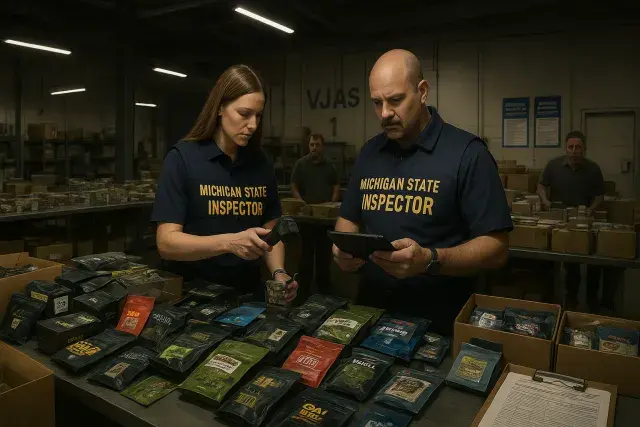
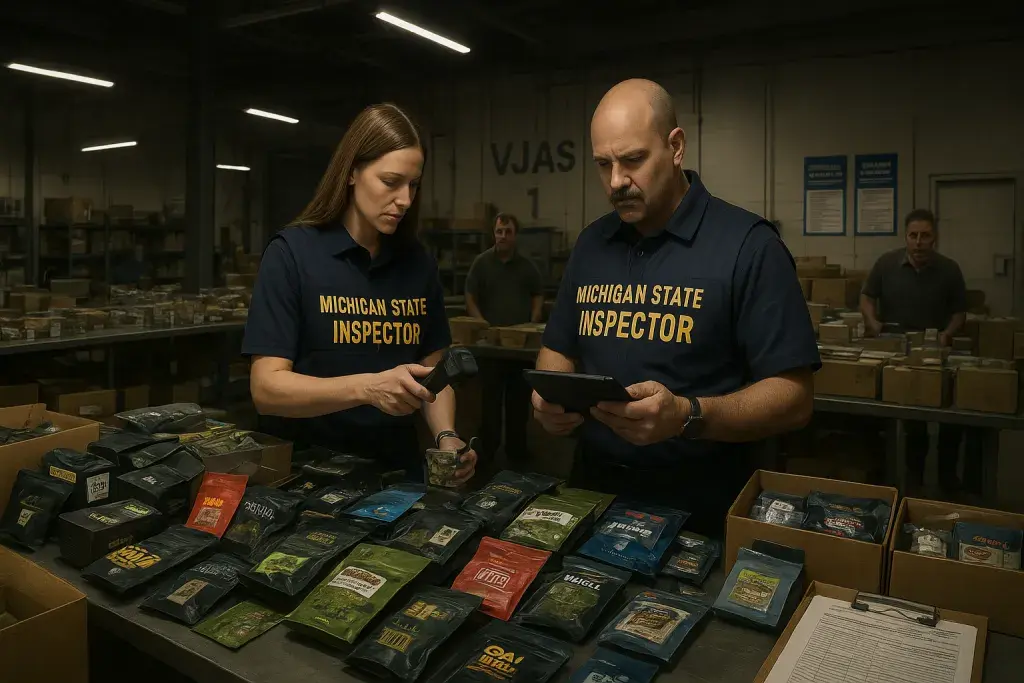
A Michigan cannabis processor is facing potential license revocation after state inspectors found more than 12,000 untagged cannabis products at its Harrison Township facility - including items in California-specific packaging that had no business being inside a licensed Michigan operation. The Michigan Cannabis Regulatory Agency filed a formal complaint against VJAS 1, setting the stage for fines and a range of disciplinary actions that could end the company's licensed status entirely.
What makes this case particularly damaging, from a compliance standpoint, is the scale and specificity of what investigators found. Twelve thousand-plus products without Metrc tags isn't a clerical slip or a labeling backlog - it's a systemic failure of seed-to-sale tracking, the foundational accountability mechanism every licensed cannabis operator in the country is required to maintain. Operators in other regulated states understand this acutely; even businesses evaluating cannabis pos systems new york routinely prioritize Metrc integration as a baseline requirement before anything else goes live. In Michigan, as in every Metrc-connected market, every unit that moves through a licensed facility is supposed to carry a unique identifier from cultivation through final sale. The presence of thousands of untagged products - combined with California-labeled packaging bearing state-specific consumer warnings - strongly suggests the inventory did not enter through any licensed Michigan supply chain at all.
What the Inspection Actually Revealed
The CRA's findings break down into two distinct problems, and both are serious. First, the sheer volume of untagged products. When inspectors arrived, employees could not explain where the inventory came from or why it lacked identifying information. That's not a paperwork problem. In a properly run cannabis facility, every product batch is logged, tagged, and traceable. The inability to account for thousands of units points to inventory entering the facility outside of any licensed acquisition channel - which, in regulatory terms, is precisely the kind of diversion that Metrc exists to prevent.
Second, and more damning, some products that did carry Metrc tags turned out to be misplaced - cross-referencing showed those tagged items were supposed to be sitting at entirely different cannabis businesses. That detail matters. It suggests these weren't just mislabeled goods; some of these products may have moved between licensed entities without the transfers being recorded in the state's tracking system. Under Michigan's cannabis regulations, any transfer of product between licensees requires a documented manifest and a corresponding Metrc transaction. No manifest, no legitimate transfer. Full stop.
The Regulatory Risk VJAS 1 Is Now Facing
The CRA has put the full range of disciplinary tools on the table: fines, suspension, restriction, revocation, and refusal to renew. That last one - refusal to renew - is quietly the most consequential for an ongoing business. Revocation ends a license immediately; refusal to renew can effectively accomplish the same thing while working through a longer administrative process. Either way, VJAS 1 is looking at the possible end of its licensed operation in Michigan.
For other processors and operators watching this case, the practical message is straightforward. Inventory reconciliation isn't optional housekeeping - it's the mechanism regulators use to determine whether a licensee is operating inside the legal market or not. Facilities that run large volumes of untagged product, regardless of how those products arrived, expose themselves to exactly this kind of enforcement action. The "we don't know how it got here" response, while perhaps honest, does nothing to establish compliance. It may, in fact, deepen the regulator's concern.
What This Means for the Broader Industry
Cases like this one have implications beyond the single operator being charged. The Michigan cannabis market is mature enough that regulators have developed real investigative muscle - they know what to look for, and they know how to cross-reference Metrc data against physical inventory in ways that quickly expose discrepancies. The California packaging detail is almost certainly what escalated this from a paperwork concern to a full formal complaint. Products bearing another state's consumer warnings and regulatory markings are visible, unmistakable evidence that goods entered the Michigan market outside any licensed channel.
That's a consumer safety issue as much as a compliance one. Products that bypass the licensed supply chain also bypass Michigan's mandatory laboratory testing requirements. Whatever those California-packaged products actually contained, there is no way for the state - or any consumer - to verify potency, purity, or the absence of contaminants. That's precisely the failure mode that licensing, testing, and seed-to-sale tracking are designed to prevent.
For operators across the regulated cannabis industry, the operational takeaway is this: Metrc compliance is not a background administrative function. It is the ledger by which regulators judge whether a licensee is a legitimate market participant or a liability. Gaps in that ledger, at any scale, invite scrutiny. At the scale found at VJAS 1, they invite exactly what followed.