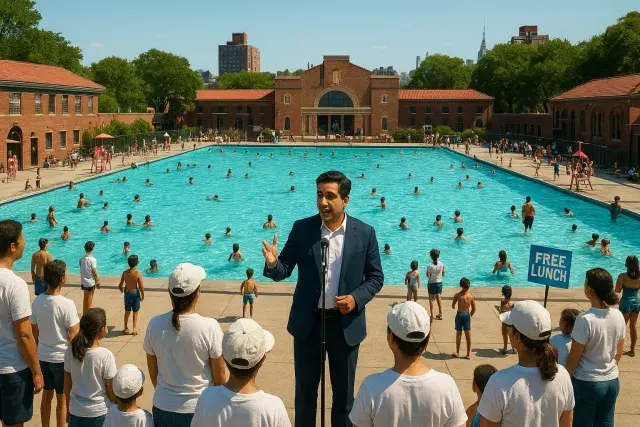
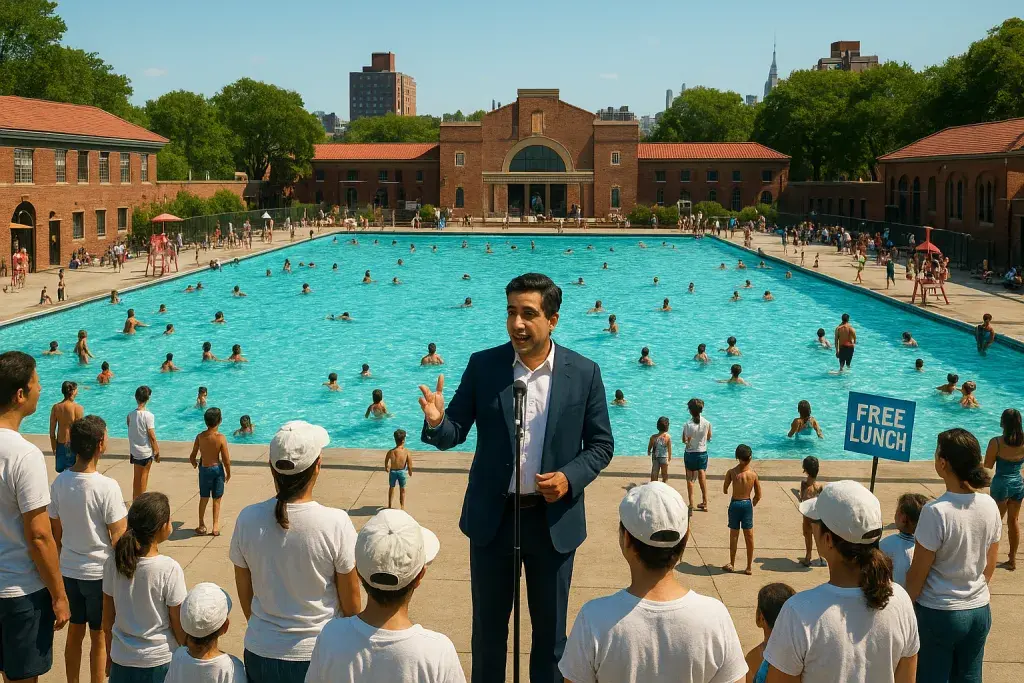
New York City's 53 outdoor municipal pools opened across all five boroughs on Saturday, June 27, 2026 - the first weekend of the summer school break - marking the start of a free public swimming season that runs through September 13. Mayor Zohran Mamdani led the inaugural ceremony at Thomas Jefferson Pool in East Harlem, one of 11 Olympic-size facilities that date to 1936, when federal New Deal investment built them as public infrastructure for working-class neighborhoods.
The timing is deliberate. Ninety years of continuous operation is not a small thing for a municipal system that serves more than a million residents each summer without a fee. That scale - 53 installations spread across Brooklyn, the Bronx, Manhattan, Queens, and Staten Island - makes New York's public pool network one of the most extensive of any American city. For context on how public-access infrastructure intersects with regulated retail and licensed business environments in other states, you can learn more about how Oregon has approached its own frameworks for licensed operations and public-facing compliance.
Red Hook Pool in Brooklyn is the only facility not opening this season. Equipment damage has kept it offline, though the city expects to reactivate it before the end of July. Mini-pools, located in playground settings and designed for younger children, close one week early on September 7. All other pools operate daily from 11 a.m. to 7 p.m., with a mandatory cleaning closure between 3 and 4 p.m.
Access Rules, Crowd Management, and What to Bring
On high-traffic days, staff may cap occupancy and issue wristbands at the entrance - effectively a timed-return system that lets visitors leave and come back at an assigned window without waiting in line. Arriving early or just after the 4 p.m. reopening reduces wait times considerably. Free sunscreen is available at every pool in the five boroughs.
The access requirements are specific and consistently enforced:
- Swimwear is mandatory; men's board shorts must have an interior lining
- Bring your own sturdy padlock - small luggage locks are not accepted at lockers
- Food, drinks, glass bottles, cell phones, tablets, bags, and flotation devices are not permitted in the pool area
- Shirts or hats worn in the swim zone must be plain white - no colors, graphics, or branding
Free lunches are available at pool facilities for any visitor under 18, distributed through a partnership between the Parks Department and the city's public school system. That's a meaningful benefit for families in lower-income neighborhoods, many of which are the same communities the original 1936 pools were built to serve.
Learn to Swim Expands - 16,000 Slots Across the Five Boroughs
The city's Learn to Swim program grew substantially this summer. Eighteen pools now host the program, up from ten the previous year, creating more than 16,000 class slots between July 6 and August 28. Mayor Mamdani and Parks Commissioner Tricia Shimamura announced the expansion jointly. The program serves participants from 18 months through age 17.
Enrollment runs through a free online lottery - no first-come, first-served window that rewards whoever has the most flexible schedule. Those not selected are placed on a waitlist. Last summer, approximately 6,000 children and caregivers participated in outdoor pool classes. The expanded footprint this year covers five Brooklyn pools, three in the Bronx, five in Manhattan, three in Queens, and two in Staten Island.
Lifeguard Numbers Recover After Years of Staffing Pressure
The summer of 2025 brought a 27 percent increase in new lifeguard recruits for pools and beaches - a meaningful recovery from the staffing shortages that had strained prior seasons. More than 1,000 active lifeguards were on duty last summer, the highest count since 2019. The city expects to exceed that number this season.
That matters operationally. A public pool system of this scale cannot function safely without adequate coverage, and the staffing gap that plagued earlier seasons had real consequences for pool hours and capacity. Recovering that workforce, and sustaining it, is what actually allows the 90-year-old infrastructure to deliver on its original purpose - free, safe, accessible recreation for every New Yorker who shows up at the gate.