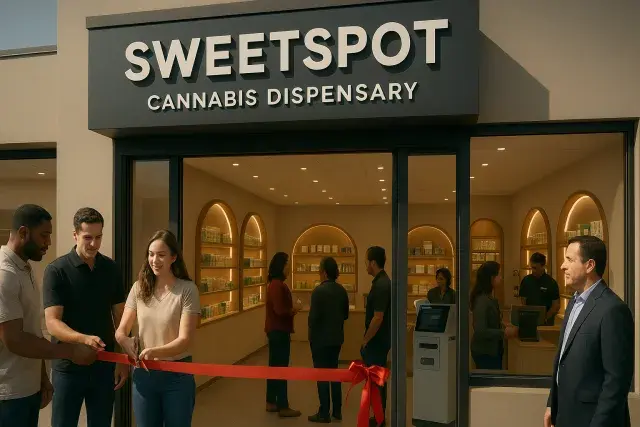
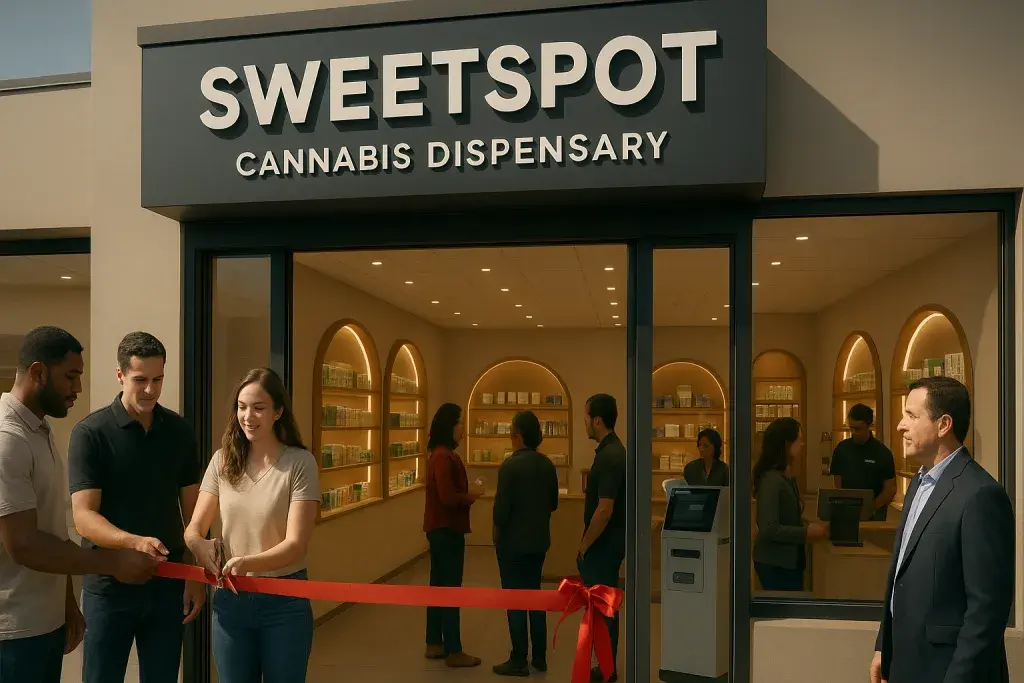
Sweetspot Cannabis Dispensary opened its Hamilton Township location at 147 Sloan Ave. on June 1, 2026, bringing a franchise-operated adult-use store to Mercer County and pushing the brand's total East Coast footprint to nine dispensaries. The opening marks the fourth Sweetspot location in New Jersey - a state whose adult-use market remains competitive, highly regulated, and closely watched by multi-state operators sizing up franchise expansion as a growth vehicle.
Franchise Structure Meets a Maturing State Market
Franchising is still a relatively unusual model in licensed cannabis retail, and for good reason. The patchwork of state-by-state licensing regimes, residency requirements, and ownership-change rules makes replicating a QSR-style franchise playbook far more complicated than it sounds. In New Jersey specifically, the Cannabis Regulatory Commission governs who can hold a license, how ownership transfers are disclosed, and what operational standards apply - none of which bend to accommodate a corporate growth deck.
That said, franchise arrangements in cannabis aren't impossible. They tend to work when the franchisor provides back-end infrastructure - point-of-sale systems, compliance protocols, staff training, wholesale menu curation, brand standards - while a locally licensed franchisee holds the retail license and assumes operational accountability. Harry Patel, the franchise owner of Sweetspot Hamilton, fits that structure: he's the licensed operator on record, and Sweetspot provides the playbook. Whether the arrangement involves a management services agreement or a more traditional franchise fee model isn't disclosed, but the mechanics matter to any operator watching this space.
For investors and would-be franchise operators, the structure raises real questions about how regulatory scrutiny applies to the underlying business relationship. New Jersey's CRC requires disclosure of all persons with a financial interest in a cannabis license. That requirement doesn't disappear because a party calls itself a franchisor rather than a co-owner. Compliance professionals who've watched other states scrutinize franchise arrangements know the line between "brand licensing" and "undisclosed ownership" can get thin fast.
The Store Design Reflects a Broader Retail Strategy Shift
Sweetspot Hamilton's sales floor features product display arches and self-service kiosks - a design direction that a growing number of cannabis retailers are adopting as the adult-use customer base broadens. The logic is straightforward: a first-time buyer who feels overwhelmed by a clinical counter service model is more likely to leave without purchasing than a customer who can browse at their own pace, consult a kiosk, and flag a budtender when ready.
Self-service kiosks in cannabis retail aren't simply a convenience play. They carry compliance weight. Any kiosk that processes transactions - or even displays product information linked to a purchase flow - must integrate with the store's seed-to-sale tracking system. In New Jersey, that means METRC compliance: every transaction, every SKU movement, every inventory adjustment feeds into the state's tracking infrastructure. A kiosk that misfires on that integration doesn't just create a poor customer experience; it creates a compliance gap that shows up in an audit.
Display-focused store design also affects how staff time gets allocated. When product education is partially offloaded to visual merchandising and self-guided browsing, budtenders can concentrate on higher-value consultations rather than explaining the difference between an indica and a sativa to every person who walks in. That's an operational efficiency argument, not just an aesthetic one.
What the Hamilton Opening Signals for Mercer County's Market
Mercer County isn't a cannabis retail desert - Trenton and the surrounding townships already have licensed dispensaries operating under New Jersey's adult-use framework. A new entrant doesn't automatically reshape a local market, but it does add competitive pressure on existing operators, particularly around menu differentiation, pricing visibility, and customer retention. In a regulated market where all competing stores are sourcing from the same pool of licensed New Jersey cultivators and manufacturers, the product menu can look remarkably similar across storefronts. That's where store experience, staff knowledge, and loyalty programs - when compliant with state advertising and promotional rules - do the real competitive work.
The store's hours - 10 a.m. to 8 p.m. daily - sit within the operating parameters New Jersey municipalities can set, and they reflect a conservative but customer-accessible window. Some operators push for expanded hours where zoning and local ordinance allow; others keep tighter hours to manage labor costs. For a franchise operator still building out local customer habits, the current schedule is a reasonable starting point.
Age verification is non-negotiable: the store requires a valid government-issued ID for all adults 21 and older, which is baseline compliance under New Jersey law. That's worth stating plainly - not because it's unusual, but because ID verification failures are among the most common compliance violations that draw regulatory action in adult-use states, and the requirement applies to every transaction, every day, without exception.