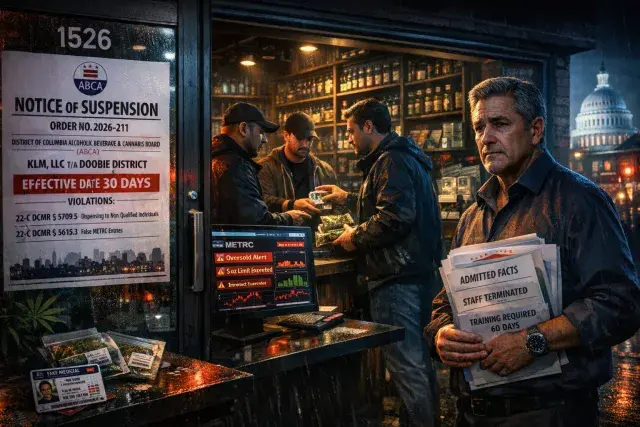
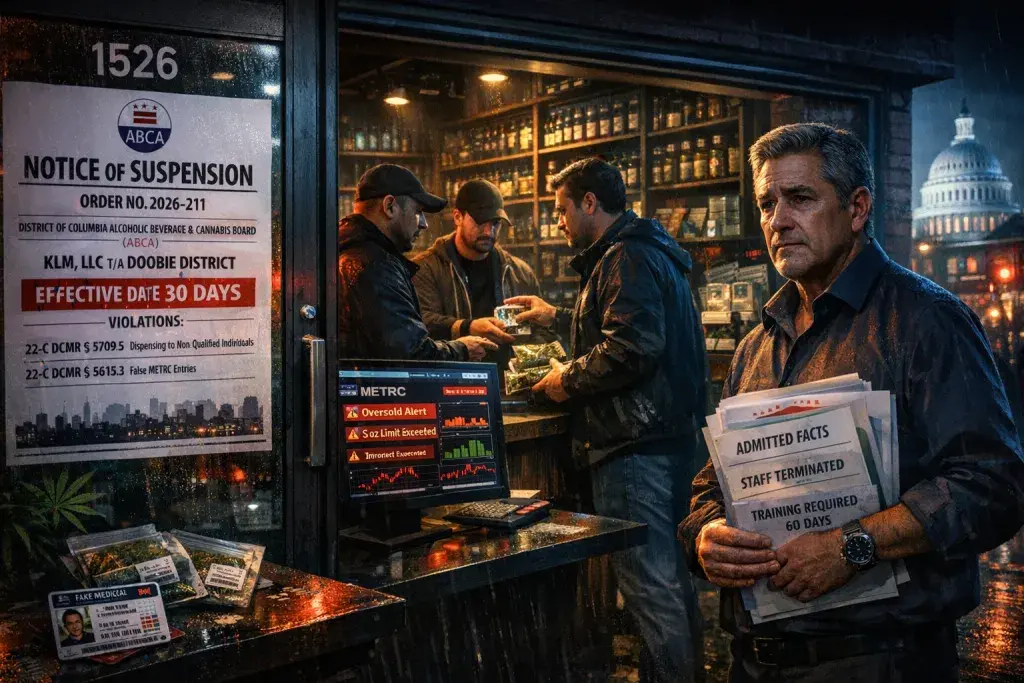
On February 11, 2026, the District of Columbia Alcoholic Beverage and Cannabis Board issued Order No. 2026-211, suspending KLM, LLC—operating as Doobie District on U Street—for 30 days. The action targets serious breaches in medical cannabis dispensing and tracking, underscoring the need for strict compliance to protect patients and prevent diversion in DC's regulated market.
Undercover Probe Uncovers Dispensing Flaws
An ABCA investigation, sparked on May 9, 2025, by tips of unauthorized sales, revealed Doobie District at 1526 U Street, NW, selling medical cannabis without verifying patient or caregiver status. Undercover buys confirmed staff skipped ID checks, handing over products labeled with an employee's details instead of the buyers'—a clear red flag in compliance.
- Two controlled purchases involved medical-grade cannabis from licensed cultivators.
- Employee's METRC account showed purchases exceeding the 8-ounce, 30-day patient limit.
- Two other accounts were "oversold" using the same credentials, falsifying real-time tracking.
Board Upholds Charges Amid Staff Misconduct
The Board sustained violations of 22-C DCMR § 5709.5 (dispensing to non-qualified individuals) and § 5615.3 (false METRC entries). Principal owner Peter Murillo admitted the facts, noting terminated employees and retraining, plus new personal oversight on sales. Yet, the Board stressed licensee responsibility, opting against revocation but imposing training within 60 days.
Implications for DC's Medical Cannabis Landscape
Seed-to-sale systems like METRC are vital for traceability, curbing black-market diversion and ensuring only verified patients access therapeutic cannabis. This case highlights risks of lax verification: potential health mismatches for unqualified users and eroded trust in DC's program, launched in 2011 to aid medical needs amid federal constraints. With recreational sales booming, such lapses could invite stricter oversight, prioritizing patient safety over profit in a market projected to grow amid evolving regulations.