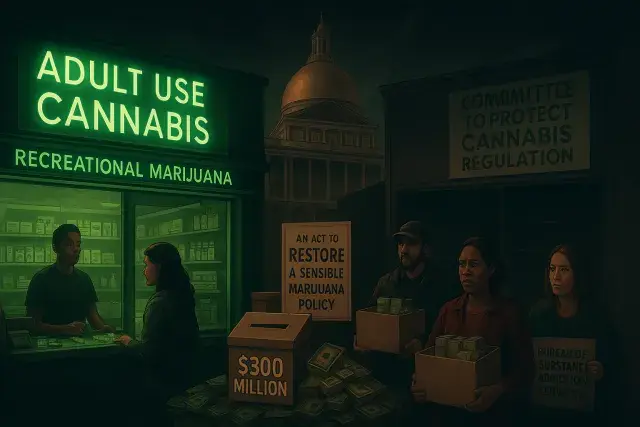
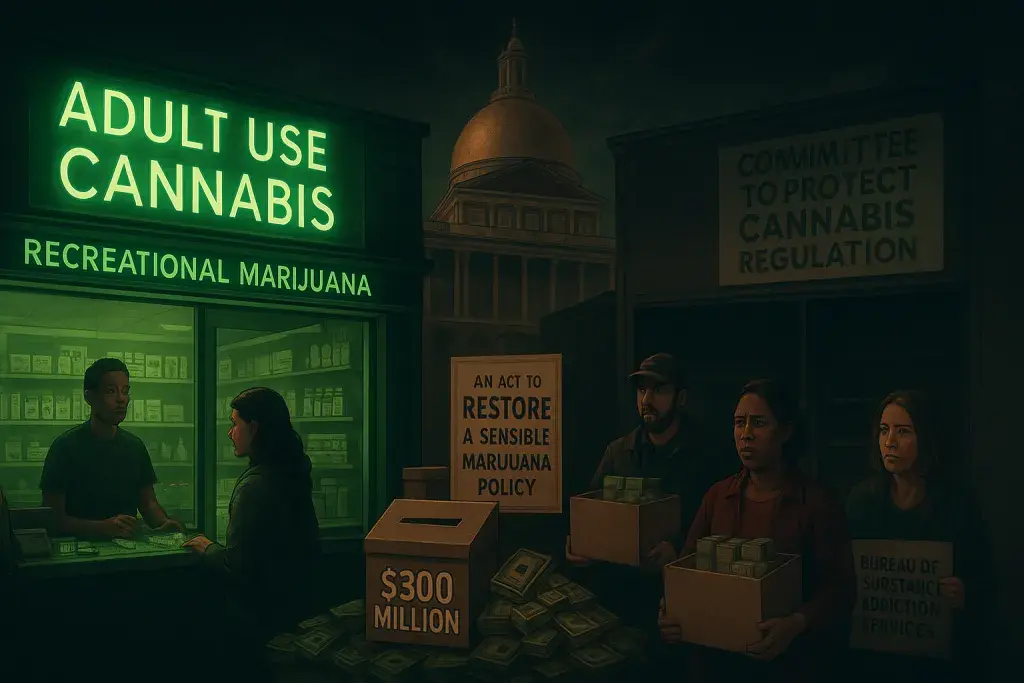
A ballot question set to appear before Massachusetts voters this November would repeal the state's recreational marijuana laws - and if it passes, it would mark the first time any U.S. state has reversed adult-use legalization. The measure, titled "An Act to Restore A Sensible Marijuana Policy," would eliminate the regulatory framework built since the 2016 voter-approved referendum, wiping out licensing rules, testing requirements, and the tax structure that generated nearly $300 million in state revenue last year. For the hundreds of licensed retailers, cultivators, and product manufacturers operating in Massachusetts today, this is not a distant political story. It's an existential business risk.
The stakes extend well beyond Massachusetts. Other regulated markets - including operators running POS software for Colorado cannabis retailers and operators in every other adult-use state - are watching closely, because a successful repeal would hand anti-legalization advocates their first concrete proof that voters can be persuaded to walk a legalization back. That changes the political calculus everywhere. For the cannabis industry's operators, investors, and technology vendors, the Massachusetts question is a stress test of whether regulatory legitimacy, once earned at the ballot box, can be reliably sustained.
What the Repeal Would Actually Do to Operators
Strip away the policy language, and the operational picture is stark. The Cannabis Control Commission would retain authority over medical marijuana, but its adult-use regulatory infrastructure - licensing, testing oversight, seed-to-sale tracking compliance, excise tax collection - goes dark. Recreational retailers would face a forced choice: convert to medical licensee status or sell remaining inventory to medical licensees before closing. Many won't convert. Licensing costs for medical establishments run significantly higher than for adult-use retailers, and the CCC's own expedited transition process cannot paper over that economic gap. Operators who built their business models around adult-use volume, wholesale pricing contracts, and recreational foot traffic have no clean path to a medical-only future.
The social equity dimension makes this even harder to untangle. Roughly 15 percent of Massachusetts open cannabis businesses participate in the state's social equity and economic empowerment programs - groups that received nearly $60 million in grant funding drawn directly from recreational cannabis tax revenue. Every one of those businesses is in the adult-use market. The repeal would eliminate the tax stream that funds their survival grants at precisely the moment many are still struggling to break even. The CCC is currently developing new medical sales licenses exclusive to these groups, but that program is not yet operational, and the regulatory hurdles involved are steep. To put it plainly: the businesses that took the longest to get into this market would be the first casualties of leaving it.
The Tax and Budget Exposure Is Real
Cities and towns collected $50 million from cannabis taxes last year. State health officials have said that losing marijuana tax revenue would cut directly into programs administered by the Bureau of Substance Addiction Services - a grim irony, given that repeal advocates frame their argument partly around public health concerns. When a single revenue stream is funding the same public health infrastructure that critics cite as the reason to eliminate it, the policy logic gets complicated fast.
The repeal would not create a prohibition. Adults 21 and over could still possess up to one ounce without penalty, and medical cannabis would remain untouched. But the removal of the full regulatory framework - testing requirements, licensed dispensary operations, compliant packaging mandates, age verification protocols - would eliminate the consumer safety architecture that legal retail actually provides. Unregulated supply does not come with certificates of analysis. It does not carry child-resistant packaging. It does not verify age at point of sale.
Who Is Behind the Campaign, and What Operators Should Watch
The Coalition for a Healthy Massachusetts received over $1.5 million last year from a single donor - a subsidiary of Smart Approaches to Marijuana, a Virginia-based anti-legalization nonprofit. The campaign's original petitioner holds a seat on the Massachusetts Republican State Committee, and the coalition's spokesperson is a Republican Party strategist, though the campaign has publicly distanced itself from any party affiliation. The opposition effort, the Committee to Protect Cannabis Regulation, had raised just over $10,000 in public disclosures as of last year. That funding gap is significant. Ballot campaigns are won or lost on earned and paid media, and the pro-industry side has ground to make up before November.
Massachusetts was also the first state to write social equity requirements directly into its legalization statute - a model that other states later followed. A repeal here does not just close dispensaries. It dismantles a regulatory template that shaped how multiple states structured their licensing programs. That is the broader industry implication that operators, investors, and trade associations in every legal market should take seriously, regardless of which state they operate in.