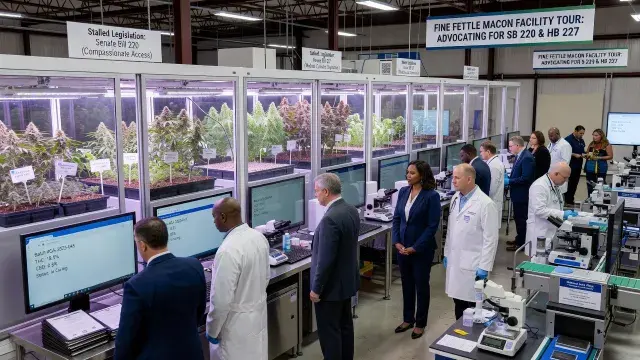
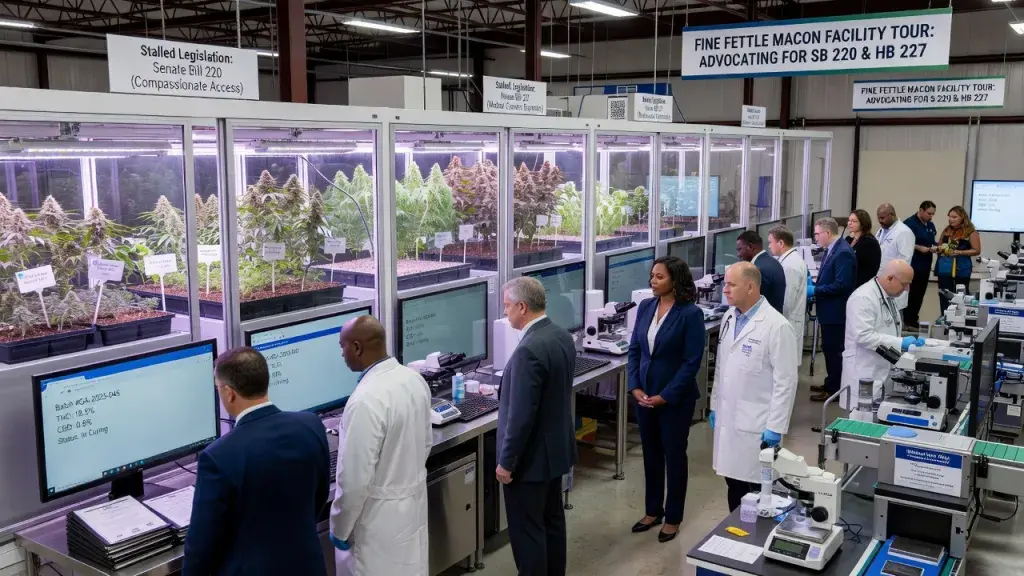
MACON-BIBB, Ga. - A decade after Georgia legalized medical cannabis, the program still runs on narrow rails. Only three licensed operators grow, manufacture, and distribute product statewide, and lawmakers have shelved expansion bills session after session. Fine Fettle's Macon facility decided the legislature needed a firsthand look rather than another committee summary, inviting lawmakers, physicians, and patients to walk the production floor.
That kind of transparency push matters more than it might seem on the surface. Regulated cannabis operators live under compliance regimes that most retail sectors never touch - seed-to-sale tracking, batch testing, controlled cultivation environments, and state-mandated packaging standards all factor into how a company like Fine Fettle proves its product supply is consistent and traceable. Back-office systems matter just as much as the cultivation room; the same operational discipline that governs plant tracking also extends to retail infrastructure, including the kind of point of sale software Montana dispensaries and other limited-license markets rely on to keep inventory, tax reporting, and patient verification aligned with state law. In a market with only a handful of licensed producers, every operational choice carries outsized weight, since there's little competitive cushion if compliance slips. point of sale software montana
Why the Legislature Keeps Stalling
Senate Bill 220 and House Bill 227 both aimed to expand Georgia's medical cannabis program this session - easier access to medical cannabis cards, updated product forms meant to broaden what patients can legally use. Both stalled. That's not unusual for cannabis legislation in states that legalized narrowly and cautiously; Georgia's program was built with tight guardrails from the start, and loosening those guardrails means lawmakers have to weigh access against control, patient advocacy against regulatory caution. In practice, though, stalled bills carry a real cost for operators who've built facilities and supply chains around a program that hasn't grown to match patient demand.
The Access Gap Physicians Are Flagging
Dr. Elmore Alexander's concern points to a mechanism familiar to compliance-minded operators everywhere: a limited product menu can treat the bulk of a patient population but leaves a smaller, harder-to-serve group without options. When state law restricts product forms - dosage types, delivery methods, formulations - that 20% Alexander references doesn't just wait patiently. Some patients turn to unregulated sources, which sidesteps lab testing, certificate-of-analysis requirements, and the dosing consistency that licensed production is designed to guarantee. That's a consumer-safety argument as much as a policy one.
What Expansion Would Mean for Operators
For the three licensed operators currently serving Georgia, program expansion isn't just good policy optics - it's a wholesale pricing and SKU management question. Broader product-form approval means new manufacturing lines, updated compliant packaging, and fresh registration paperwork with the state. State Representative Anissa Jones framed her takeaway around control: a licensed, tracked cultivation system isn't "folks out there growing stuff wild," as she put it, but a repeatable, tested process. Whether Georgia lawmakers move on that distinction next session remains an open question, and operators are left building infrastructure for a market that may or may not expand on their timeline.