Leafly Picks has published its annual roundup of hemp-derived THC beverages, naming 11 products the outlet considers standouts in a category that keeps expanding faster than most retailers can track. The list matters less as a shopping guide and more as a signal: hemp beverages, sold under the 2018 Farm Bill's federal legality for hemp-derived compounds, have become a real commercial category that dispensaries, convenience stores, and liquor retailers are all competing to stock.
That expansion creates a compliance puzzle operators can't ignore. Hemp-derived THC drinks occupy a gray zone between cannabis regulation and general food and beverage law, and state treatment varies widely - some states allow retail sale with minimal restriction, others require licensing similar to adult-use cannabis, and a handful ban the products outright. For a licensed cannabis retailer trying to add these SKUs to a wholesale menu, that variance means checking not just product COAs but also state-specific shipping and sale restrictions before a single case hits the stockroom. Point-of-sale infrastructure has to keep pace too; a dispensary integrating hemp beverages alongside traditional flower and edibles needs a system capable of separating tax categories and compliance logs correctly, which is part of why platforms offering a dedicated point-of-sale for Minnesota dispensaries have built specific workflows for jurisdictions where hemp and adult-use cannabis rules diverge sharply.
Why Hemp Beverages Complicate Retail Compliance
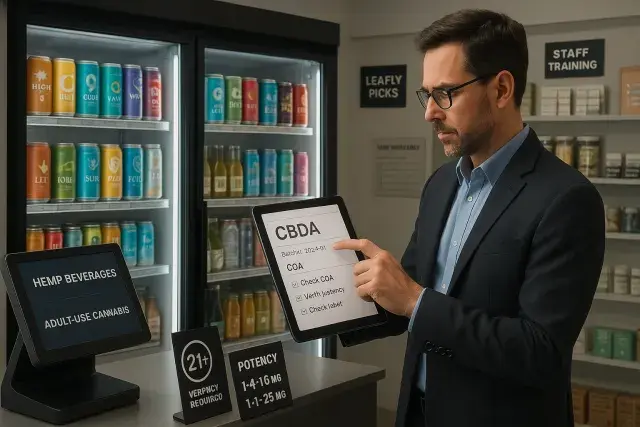
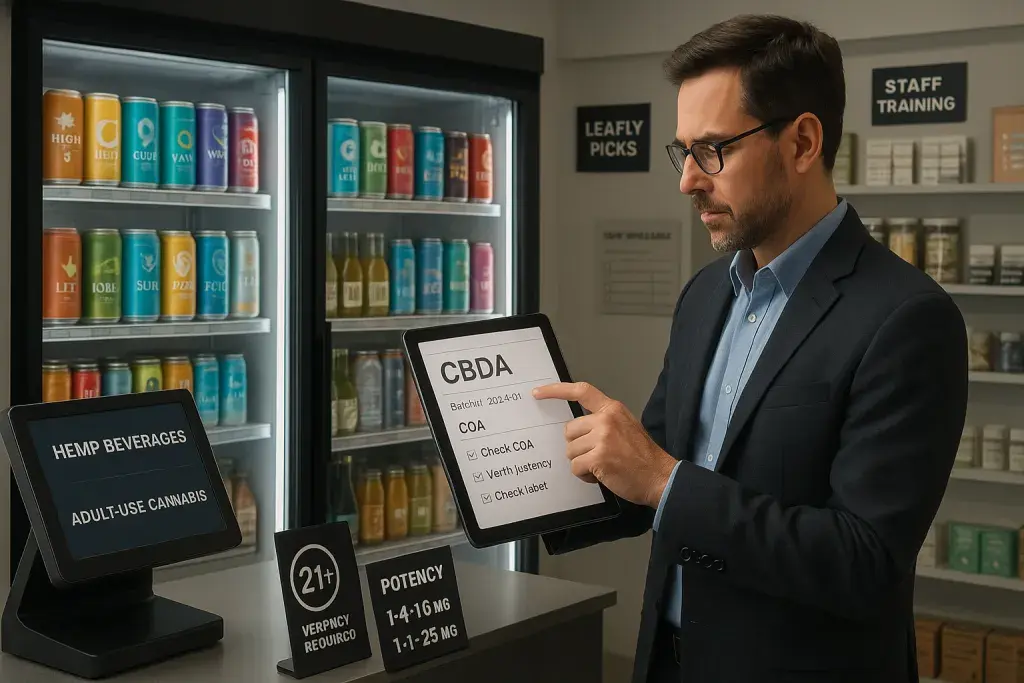
The core issue is that hemp beverages are federally legal by virtue of falling under the 0.3% delta-9 THC threshold, not because they've cleared the same state licensing and seed-to-sale tracking requirements that adult-use cannabis products must meet. That distinction sounds tidy on paper, but in practice it means a beverage brand can ship directly to consumers in states where a licensed dispensary would face a far more rigorous compliance burden for a comparable product. Retailers who carry both categories need clear internal protocols for age verification, batch tracking, and lab documentation - third-party COAs aren't optional if a brand wants to be taken seriously, and reputable operators publish them without prompting.
What Operators and Buyers Should Weigh
For dispensary buyers and wholesale purchasers, the beverage category raises real questions about margin, shelf life, and shrinkage that differ from flower or vape inventory. Cans and bottles carry different storage and display needs, and staff need training on potency ranges that can run from a low single-digit milligram dose up to double digits per serving - a wide spread that puts real weight on accurate labeling and point-of-sale prompts that flag age and purchase limits.
- Confirm state-level legality before adding hemp THC beverages to any wholesale order or retail shelf.
- Require current COAs from every batch, not just a brand's general lab history.
- Train front-of-house staff on potency variance across cans, since dosing isn't standardized across the category the way it is for many regulated cannabis edibles.
- Update POS tax categorization to distinguish hemp-derived beverages from state-licensed cannabis products where rules differ.
The Bigger Retail Picture
What's striking here is how quickly hemp beverages have moved from novelty to fixture, occupying cooler space once reserved for hard seltzers and sodas. That shift puts pressure on regulators to clarify rules state by state, and on retailers - licensed and unlicensed alike - to treat these products with the same seriousness applied to any intoxicating good sold to the public. Consumer safety doesn't hinge on category labels; it hinges on testing, accurate potency disclosure, and point-of-sale systems built to catch mistakes before they reach the counter.