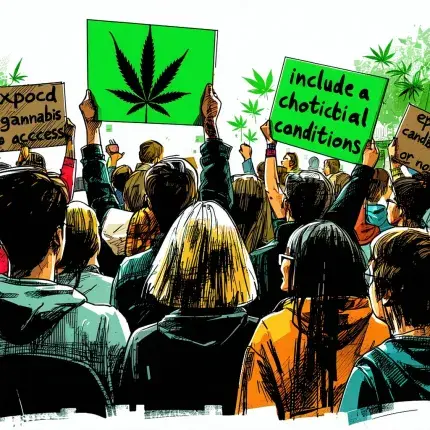
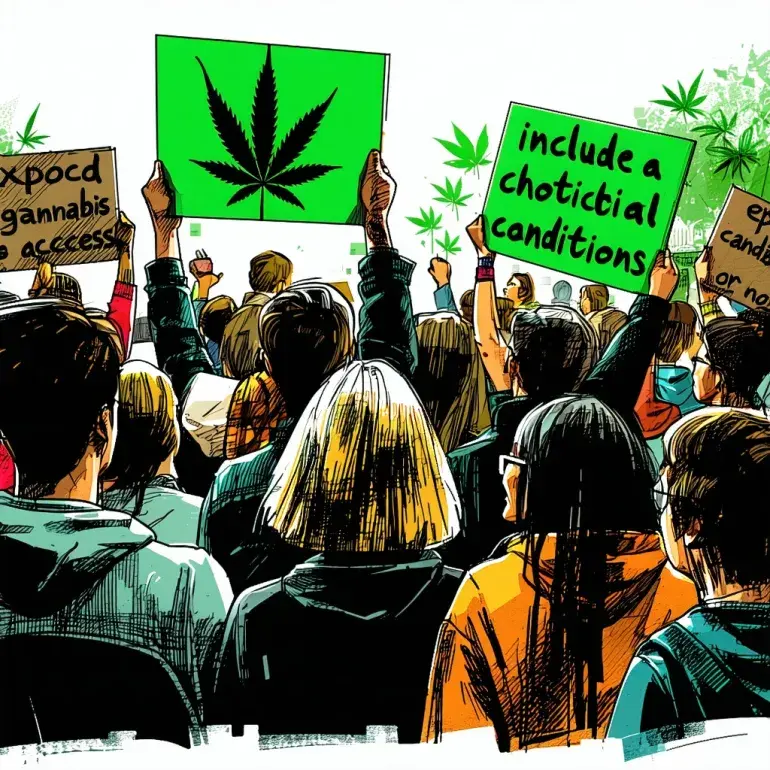
On Thursday, advocates testified before state lawmakers at Mercer University, arguing that Georgia's restrictive medical cannabis laws deny relief to thousands suffering from chronic conditions. This push highlights a growing tension between outdated regulations and evolving public health needs, potentially leaving patients underserved.
Outdated Hope Act Limits Patient Access
Georgia's Low-THC Medical Cannabis Program, established by the 2019 Hope Act, confines eligibility to patients with terminal conditions. Products must come from just three state-licensed dispensaries, like Fine Fettle in Macon, and are restricted to non-smokable forms such as edibles or topicals. The Georgia Department of Public Health reports about 30,000 enrolled patients—a fraction of those who could benefit, advocates say.
- Terminal conditions only qualify, excluding chronic pain, PTSD, epilepsy, and anxiety.
- No inhalable options, despite evidence that vaping or smoking provides faster symptom relief for acute episodes.
- Hemp-derived products face similar hurdles, stifling innovation in low-THC therapies.
Industry and Patient Voices Call for Change
Judson Hill, Georgia Market President of Fine Fettle, emphasized the need for broader qualifying conditions and diverse products to "catch Georgia up" with national trends. Many patients turn to illegal markets or out-of-state options, risking untested products. Public health experts note cannabis's proven efficacy for nausea, neuropathic pain, and spasticity—conditions affecting millions nationwide—yet Georgia's framework lags behind states like Florida or Colorado, where expanded programs serve hundreds of thousands safely.
Legislative Path Forward Balances Expansion and Safeguards
State Rep. Mark Newton, a physician chairing the House Blue Ribbon Study Committee on Medical Marijuana and Hemp Policies, supports expansion but prioritizes youth protection and medical oversight. The committee's statewide tour gathers input for 2026 recommendations after failed 2025 bills. Broader implications include reduced opioid reliance—cannabis states see 20-30% drops in painkiller prescriptions—and economic boosts from local cultivation. Evolving perceptions could unlock Georgia's cannabis potential, fostering safer, legal access amid a national shift toward medical normalization.