Grandparents sitting on unused 529 college savings balances have a federally sanctioned option most families overlook: using that money to pay down a grandchild's student loans, tax-free, up to a lifetime cap of $10,000 per borrower. The rule has been on the books for several years, but plan administrators say it still catches account holders off guard when a beneficiary graduates with money left over.
What the Tax Code Actually Allows
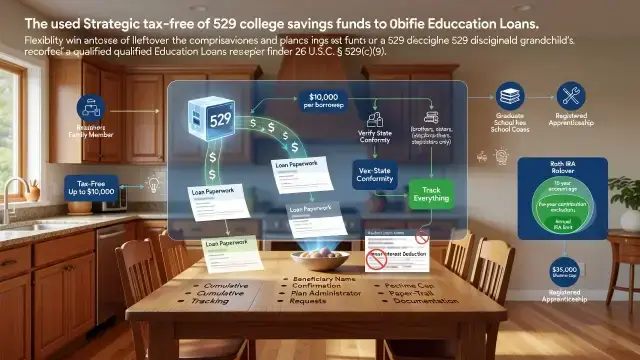
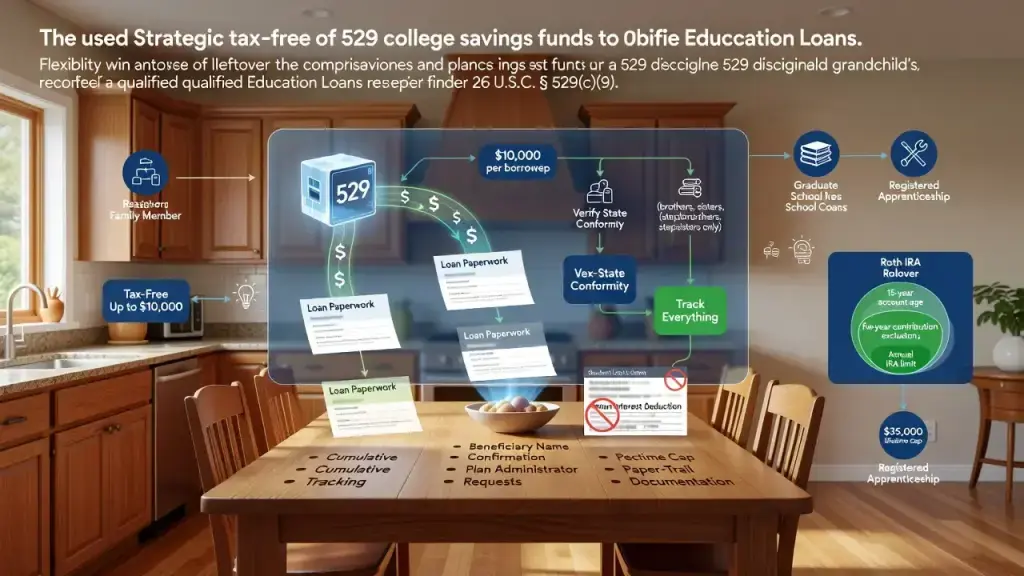
Under 26 U.S.C. § 529(c)(9), qualified education loan payments count as a qualified higher education expense - the same category that covers tuition and housing. The provision applies to both principal and interest, and the $10,000 ceiling is per person, not per account. A beneficiary's sibling gets a separate $10,000 limit, and a single 529 account can be used to pay down loans for multiple grandchildren over time, as long as each person's own cap isn't exceeded. IRS Publication 970 echoes this, defining sibling narrowly: brothers, sisters, stepbrothers, stepsisters. Cousins don't qualify. Neither do loans held in a parent's name, since the borrower has to be the beneficiary or that person's sibling.
The Mechanics Families Tend to Miss
Account holders need to confirm who the named beneficiary is before requesting a withdrawal. If the grandchild carrying the loan isn't the beneficiary, the account can be switched to them - a change that isn't treated as a taxable distribution. From there, it's a matter of pulling a current loan statement, requesting the withdrawal through the plan administrator, and documenting exactly where the funds landed. That paper trail matters. The $10,000 limit is cumulative and shrinks with every dollar used in prior years, so a running per-person tally is essential, especially for grandparents managing accounts for several grandchildren.
Where the Rule Gets Complicated
Money applied to loan interest through a 529 withdrawal can't also be claimed under the student loan interest deduction - the deduction is reduced by the tax-free earnings portion used for that purpose. State tax treatment adds another layer. Not every state conforms to the federal definition of qualified expenses, and some don't recognize loan repayment as qualified at all. That can trigger state income tax on the distribution or claw back a state deduction taken when the money was originally contributed. Before requesting a withdrawal, the practical move is a direct call to the plan or the state tax agency to ask one question: does this state treat student loan repayment as qualified?
Beyond Loans: Other Uses for Leftover Balances
Loan repayment isn't the only route for unused 529 funds. Accounts can be reassigned to another family member still pursuing a degree, applied toward graduate school, or used for registered apprenticeship costs - fees, books, supplies, and equipment tied to programs registered with the Secretary of Labor. A newer option allows a rollover into a Roth IRA for the beneficiary, though it comes with conditions: the account must have been open at least 15 years, contributions from the past five years aren't eligible, annual rollovers are capped at that year's IRA contribution limit, and the lifetime rollover total is capped at $35,000.
Spending outside these qualified categories carries a real cost - the earnings portion becomes taxable income, plus an additional 10% tax applies, with narrow exceptions for death, disability, or scholarship receipt. For families holding leftover 529 balances, the loan repayment option offers real flexibility, but it rewards the same discipline that cannabis operators and other regulated businesses know well: track everything, confirm the rule in writing, and verify before you move the money.